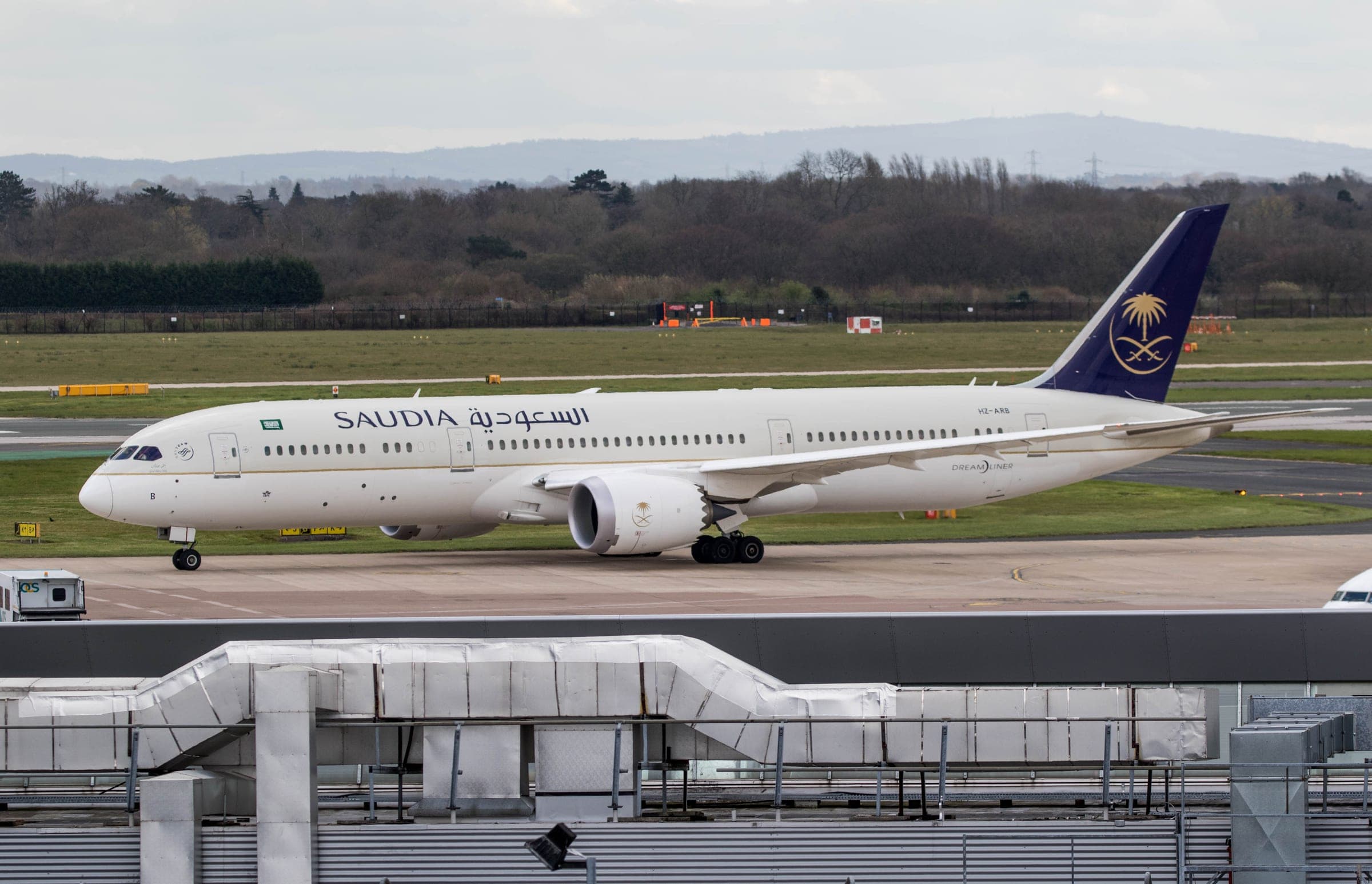
Saudi Arabia is trying to build a top-tier aviation industry from a standing start, and the arithmetic of that ambition lands directly on hiring. The Kingdom's aviation strategy targets 330 million passengers a year by 2030. You do not move that many people without airframes, and you do not fly the airframes without crews. For pilots, cabin crew and engineers watching the Gulf market, Saudi Arabia is where the largest single block of new demand is being created this decade.
This is who is actually hiring in 2026, what they have ordered, and what the picture means if you are deciding where to point a career.
Three carriers, three different bets
The Saudi expansion is not one airline. It is at least three distinct operations hiring at once, with different fleets and different profiles.
Riyadh Air is the headline. It launched commercial service in mid-2026 from King Khalid International Airport in Riyadh, and its orderbook is built for a global long-haul network: once finalised, roughly 67 Boeing 787s, 31 Airbus A350-1000s and 60 A321neos. It began with a handful of 787-9s and a short destination list, with trade reporting pointing to around eight aircraft and 22 destinations by early 2027, on the way to a stated target of more than 100 destinations by 2030. It is recruiting experienced pilots internationally, running roadshows as far afield as South America, and building cabin crew numbers into the thousands.
flynas is the low-cost engine of the expansion, and in pure fleet terms the most aggressive. It holds firm orders for up to 280 Airbus aircraft, a mix dominated by the A320neo family with 30 A330neos for longer sectors, against a current fleet of roughly 67. It operates from four bases, Riyadh, Jeddah, Dammam and Madinah, and expects to keep taking A320neo deliveries through 2026 and well beyond. Sustained narrowbody growth on that scale is a steady, multi-year source of first officer and command demand.
flyadeal, backed by Saudia, adds a third stream, taking its first A321neos from 2026 and extending the low-cost buildout.
Behind all three, Saudia itself is one of the most active recruiters among major carriers worldwide, rebuilding and growing crew pools as its own fleet renews.
The localisation dimension changes who gets hired for what
Saudi Arabia's expansion carries a Saudisation objective that shapes the hiring map, and it is worth understanding because it determines which doors are open to whom.
At the ab-initio end, the national carriers are training Saudi citizens from zero. flynas runs a Future Pilots programme exclusively for Saudi nationals that has already delivered enough cadets to reach full Saudisation of its A320 co-pilot roles, targeting around 300 trained pilots by 2027. Riyadh Air has partnered with Embry-Riddle to run a degree-integrated scholarship pathway for Saudi cadets. These programmes are, by design, closed to non-nationals.
At the experienced end, the picture is the opposite. Riyadh Air's international pilot roadshows and Saudia's global recruiting exist precisely because the Kingdom cannot yet produce enough experienced captains and senior first officers from within. A new widebody operation needs command-qualified pilots on day one, and those are hired on the open international market. The near-term opportunity for expatriate pilots is concentrated at the experienced, type-rated, command-capable end, while the ab-initio pipeline is being reserved for nationals.
What the fleet orders tell you about the timeline
Fleet plans are the most reliable hiring forecast in aviation, because an aircraft on firm order is a crew requirement with a delivery date attached.
The Saudi orderbook is heavily weighted toward narrowbodies, flynas A320neos and A321neos, Riyadh Air and flyadeal A321neos, which means the steadiest volume of demand will be for narrowbody first officers and, on a lag, narrowbody captains as those fleets mature and internal upgrades open up. The widebody orders, Riyadh Air's 787s and A350-1000s, drive a smaller number of higher-experience roles sooner, because a launch carrier needs experienced widebody crews before it has had time to grow its own.
For a pilot, that shapes the strategy. Experienced narrowbody pilots have the broadest set of Saudi options and the clearest upgrade runway. Experienced widebody captains are in the most immediate demand at Riyadh Air specifically. Low-hour non-nationals have the fewest direct openings, because the ab-initio seats are nationalised.
flynas: flying against ordered
Order numbers are not seat numbers. Firm orders convert to cockpits over years, and the pace in any quarter depends on deliveries, network approvals and training throughput.
The honest caveats
Two things temper the optimism.
First, launch-phase uncertainty is real. Riyadh Air is early, and early operations at any new carrier carry unsettled rosters, evolving terms and schedules that move. The pay is strong, but some elements of the package, including flight-hour guarantees, are time-limited during ramp-up. Read any launch-carrier offer on its post-ramp terms rather than its launch terms.
Second, order numbers are not seat numbers. Firm orders convert to cockpits over years, not months, and delivery streams slip. The direction of Saudi hiring is not in doubt, but the pace in any given quarter depends on deliveries, network approvals and training throughput, none of which move in a straight line.
What to watch
If you are tracking Saudi demand, the leading indicators are the delivery pace at Riyadh Air and flynas, the opening of command upgrades as narrowbody fleets mature, and whether the national ab-initio programmes scale fast enough to shift more of the experienced hiring toward nationals over time. For now, the clearest opening for the international market is experienced, type-rated pilots, and the clearest domestic story is the nationalisation of the entry-level pipeline.
2026 to 2030
- Riyadh Air enters service, flyadeal starts on the A321neo
Riyadh Air launched commercial service from King Khalid International Airport with a handful of 787-9s. flyadeal takes its first A321neos, and flynas keeps taking A320neo deliveries.
- Around eight aircraft and 22 destinations at Riyadh Air
The pace trade reporting points to. flynas is targeting around 300 trained Saudi pilots by the same year, enough to hold full Saudisation of its A320 co-pilot roles.
- More than 100 destinations, and 330 million passengers a year
Riyadh Air's stated destination target, against the Kingdom-wide passenger target the aviation strategy is built around.
A note on sourcing
Fleet and order figures here are drawn from 2026 airline announcements and trade reporting, including commitments firmed up at the 2026 Farnborough air show, alongside carrier recruitment material. Orderbooks change as options are exercised and deliveries are rescheduled, so treat specific counts as accurate to 2026 reporting rather than fixed. Confirm current fleet and hiring status against each airline's own channels before acting.