The best-paid widebody cohort in the region is also the one without a current contract. In April 2026, roughly two-thirds of Qantas long-haul pilots voted down an enterprise agreement covering about 1,700 A330, A380 and 787 crew, a deal their own union, AIPA, had recommended. The agreement it was meant to replace expired in 2024. So the pilots flying Perth to London and Sydney to Dallas are two years past contract expiry and have just rejected the deal on the table, while their short-haul colleagues sit on locked-in 3 per cent annual steps.
That is the shape of pay in Asia-Pacific this year. Legacy carriers are grinding out single-digit increases through industrial process, Cathay Pacific has restored earnings mainly through flying hours and bonuses rather than base rates, Japan pays a high but flat lifetime-employment average, and India has become the only market in the region where a rank change can multiply your income rather than nudge it.
What the ranks pay: the 2026 picture
Figures below are annual, in local currency, with the provenance of each range flagged. FX is approximate at time of writing: US$1 ≈ S$1.34, HK$7.8, A$1.54, ¥153, ₹86.
| Carrier | Second Officer | First Officer | Captain | Best available provenance |
|---|---|---|---|---|
| Singapore Airlines | S$75,000–90,000 | S$94,000–170,000 | up to ~S$355,000 | Aggregator/trade press; conflicting FO bands |
| Cathay Pacific | HK$585,000 basic (min 50 hrs/mth guarantee) | not separately published | HK$1.8m–3.8m all-in | Aggregator totals vs SCMP memo basics |
| Cathay (basic only, Jan 2024 memo) | HK$409,900 (HK$34,158/mth) | – | up to HK$1.38m (HK$114,924/mth) | South China Morning Post, internal memo |
| Qantas (mainline) | n/a | A$79,000–300,000 | A$200,000–300,000 narrowbody; A$300,000–500,000 widebody | Aggregator; EA percentages from Australian Aviation |
| Japan Airlines | n/a | ¥12m–26.4m | ¥24m–37.2m | Aggregator; consistent across two years |
| ANA | n/a | ¥10.5m entry, ¥20m–27m experienced | up to ¥38m–42m senior (outlier claim) | Aggregator |
| All Japanese pilots, official | – | – | ¥17.79m average, all ranks | MHLW wage census (FY2023), via aggregation |
| IndiGo | none employed | ₹18–30 lakh (₹1.5–2.5 lakh/mth) | ₹60 lakh–1.1 crore (₹5–10 lakh/mth) | Multiple Indian outlets, broadly agreeing |
| Air India (widebody) | n/a | not reliably sourced | above ₹10 lakh/mth all-in | Indian trade blogs only, weak |
Two things in that table matter more than the individual numbers. First, the Cathay rows contradict each other by a factor of two or more, and the reason is instructive. Second, the Indian captain band sits at four times the Indian first officer band, a step no other carrier here comes close to.
Cathay: the recovery arrived as hours and bonuses, not rates
Cathay's publicly documented base rates come from an internal memo reported by the South China Morning Post in November 2023: an entry-level second officer offered HK$34,158 a month in basic salary from January 2024, and top-level captains up to HK$114,924 a month. Annualised, that is roughly HK$410,000 and HK$1.38m of basic pay. The airline framed it as a 3.8 per cent basic increase. The Hong Kong Aircrew Officers Association's then-chairman, Paul Weatherilt, made the counter-argument bluntly: hours had already been pushed up before the rise, and because pay is hour-driven, crews would fly more to collect it. Hourly flight pay also differs between Airbus and Boeing fleets, so two captains on the same seniority level do not necessarily earn the same.
Layer the variable elements on top and the aggregator figures start to make sense. Salary sites put current captain totals at HK$1.8m–2.4m on promotion and HK$2.5m–3.8m for senior widebody commands on the A350 and 777. Pilot-community reporting on PPRuNe, dated February 2026 and describing conditions accurate as at end-2024, lists a captain monthly allowance of HK$28,000, a schooling allowance of HK$110,000 per child per year, family medical and dental cover, and a 2024 year-end bonus of one month's salary. Second officers are quoted at HK$585,000 basic with a 50-hour monthly guarantee and a HK$14,000 monthly allowance.
Read the two sets together rather than picking one. The SCMP memo is basic pay. The HK$2.5m-plus captain figures are total earnings including hourly flight pay, allowances, schooling support and bonus. Anyone comparing a Cathay offer against a Gulf or Australian one needs to know which of the two they are holding.
Compare with 2022, when Simple Flying reported base salaries running from about US$49,000 for a Level 1 second officer to about US$164,000 for a Level 4 captain, and monthly allowance increases pitched specifically at stemming resignations: Level 2 first officers from about US$2,800 to over US$3,300, Level 1 captains from about US$3,800 to over US$4,000. Four years on, the allowance architecture is still doing the heavy lifting.
One gap: I could not source current, verifiable housing allowance terms for Cathay flight crew. Community sources describe schooling and medical benefits in detail but not a housing line, and Cathay does not publish conditions of service. Treat any housing number you are quoted verbally at interview as unconfirmed until it is in your offer letter.
Qantas: 3 per cent on short haul, deadlock on long haul
Australian Aviation reported in February 2025 that short-haul pilots approved a deal with no increase for 2023 and 2024, then 3 per cent in each of 2025, 2026 and 2027, plus guaranteed pay when flights are changed or disrupted from two calendar days before a pattern starts through to the end of it. AIPA estimated the package lifts remuneration about 25 per cent over the five-year term, which tells you how much of the value sits in credit and disruption protections rather than the headline percentage. Pilots had voted down an earlier version in October 2024 over the wage freeze.
Long haul is unresolved. The April 2026 rejection leaves A330, A380 and 787 crews negotiating against an agreement that lapsed in 2024, at a moment when the group is flying premium ultra-long-haul routes that are among the most productive in its network.
Published Qantas ranges should be handled with care. The same aggregator that puts mid-career first officers at A$250,000–300,000 elsewhere quotes a first officer floor of A$79,252. Both cannot describe the same cohort. The low figure is consistent with regional turboprop or entry short-haul flying, not mainline widebody. For captains, A$200,000–300,000 base on narrowbody domestic and A$300,000–400,000-plus on 787 or A380, reaching toward A$500,000 all-in at the senior end, is the range in circulation and is directionally plausible given EA structures, though Qantas publishes none of it.
Singapore Airlines: the base rate is the least useful number
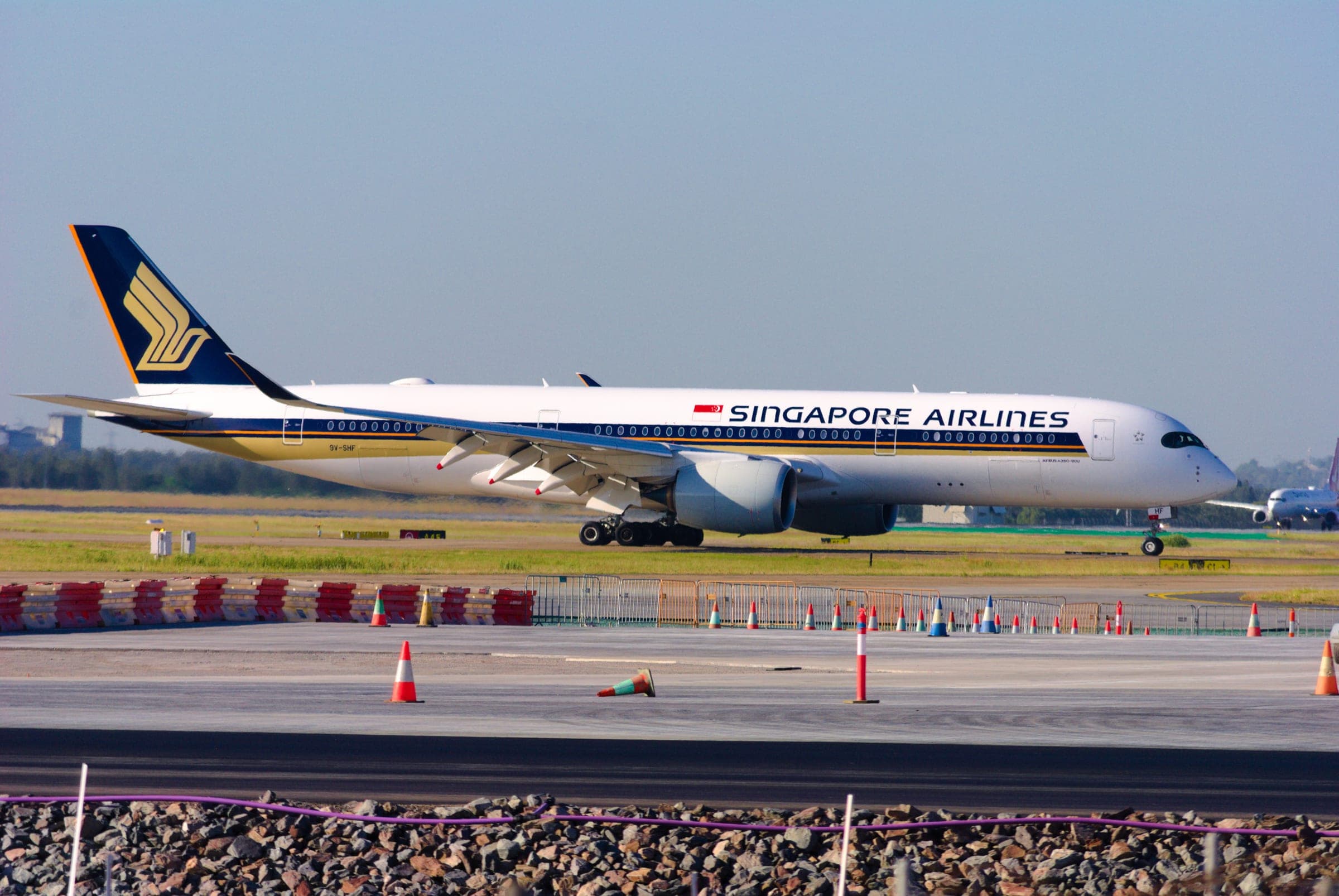
SIA figures diverge sharply depending on whether a source is quoting base or total. Phoenix East Aviation lists 777 and A330 captains starting at S$9,870 a month, about S$118,000 a year, with a productivity allowance of up to S$3,800 for pilots flying 70 hours a month. Travel And Tour World puts captain earnings as high as S$355,000. Aviation A2Z's 2026 update gives first officers S$110,000–170,000, while its own earlier piece used S$120,000–180,000 in basic salary and a December 2025 piece put newly promoted first officers at S$94,000–108,000.
The gap is not a research failure, it reflects a pay design where productivity pay, layover allowances, annual bonus and profit share can rival the basic. SIA's group-wide profit-sharing bonuses in the post-pandemic years have been unusually large by regional standards, which pushes total earnings well beyond the contractual scale in strong years and back toward the scale in weak ones. Second officers, largely cadet-programme graduates, are quoted at S$75,000–90,000, and the same source describes a seven-year bond attached to that seat because of the training and type-rating spend behind it.
Japan: high average, low visibility
Japan is the only market here with a genuinely official number. The Ministry of Health, Labour and Welfare's Basic Survey on Wage Structure puts average annual earnings for airline pilots at ¥17.79m, with regular monthly cash pay of ¥1.381m. That is an all-ranks, all-carriers average and it is the firmest single data point in this article.
Carrier-level detail comes from weaker sources. JAL first officers are quoted at ¥1m–2.2m a month, flying roughly 80 hours across 18 to 19 duty days, with a ¥2.8m completion bonus for finishing a five-year contract. Captain ranges of ¥24m–37m appear consistently across two separate write-ups. ANA entry first officers are quoted near ¥10.5m, rising to ¥20m–27m with experience on the 787 and 777.
The ANA claim of ¥38m–42m for senior captains sits more than double the official all-pilot average and should be treated as an outlier until someone produces a pay scale. Structurally, Japan's model is seniority-based progression inside near-lifetime employment, with fixed-term contracts and completion bonuses used at the first officer entry point. That combination compresses the top and slows the bottom.
India: the steepest command cliff in the region
India is where the arithmetic changes. IndiGo first officers are quoted at ₹1.5–2.5 lakh a month, ₹18–30 lakh a year, across several Indian outlets. Captains are quoted at ₹5–10 lakh a month, with a 2026 salary tracker putting captain CTC at ₹65–95 lakh and senior captains at ₹85 lakh to ₹1.1 crore, and senior or training captains at ₹7–9 lakh a month. Aviation A2Z compresses the whole pilot population into ₹18 lakh to ₹1.2 crore.
Three structural points follow.
- IndiGo employs no second officers, a function of short-haul A320 family flying. Progression runs first officer to captain with no cruise-relief step, so the upgrade is the only pay event that matters.
- The upgrade is worth roughly 3x to 4x. Nothing at Cathay, SIA, Qantas or the Japanese carriers behaves like that.
- Entry costs sit with the pilot. The same tracker puts an A320 type rating at ₹15–25 lakh on top of a DGCA CPL with 200-plus hours. That is a private, self-funded bond in all but name, repaid from a first officer salary of ₹18–30 lakh.
Air India is the weakest-sourced carrier in this survey. Indian trade blogs put widebody captains on 787 and 777 international flying above ₹10 lakh a month all-in, and describe the post-Vistara integration as pushing pay structures upward, but no scale is public and I would not plan a move on those numbers.
The outside bidder: Gulf demand is now a pay variable
Skylane's platform detected 18 pilot postings from Riyadh Air inside a 14-day window in May 2026, against an order book of 67 Boeing 787s and 31 Airbus A350-1000s. Etihad and Saudia are recruiting into similar deliveries. For a Cathay Level 3 captain or an Indian widebody commander, that is a bid with tax-free income and, in most Gulf contracts, an explicit housing and schooling package. It is also why Cathay's allowance-heavy structure and Qantas's percentage-step EAs are being read comparatively rather than in isolation. Cathay now states that applicants need the right to live and work in Hong Kong or must meet visa requirements, which narrows the old expatriate pipeline at exactly the wrong moment.
Methodology and confidence
No carrier in this article publishes a complete pilot pay scale. Confidence ranking of what is above:
- Firm. Qantas EA mechanics and the April 2026 long-haul rejection, from Australian Aviation. Cathay's January 2024 basic rates, from the SCMP's reporting of an internal memo. Japan's ¥17.79m all-pilot average, from the MHLW wage census.
- Reasonable. Cathay's allowance and benefit detail from PPRuNe, self-dated as accurate at end-2024 and consistent with Simple Flying's 2022 reporting. Indian first officer and captain bands, which agree across four independent outlets.
- Weak. Singapore Airlines first officer bands, which conflict between sources by up to S$70,000. Qantas rank ranges, all aggregator-derived. ANA senior captain figures. Air India entirely.
Where sources conflicted, both numbers are shown. Some aggregator content also appears to recycle older figures under new dates: the S$9,870 SIA captain starting rate carries a 2026 page date but reads as several years old. Treat every figure here as a negotiating benchmark, not an offer.